
You attend meetings to make decisions and move work forward. Poor notes slow teams down. This guide shows a simple note format you use after any work meeting. The structure keeps notes short, clear and useful.
Meetings fail when outcomes stay unclear. This structure forces clarity. You separate outcomes from actions and context. Your team leaves meetings with shared understanding and visible accountability.
Write Decisions
This section records outcomes. You capture agreements and rejections. You avoid discussion details. Each decision stands on its own.
How To Write Decisions
- Write short statements
- Focus on final outcomes
- Skip background explanations
Example from a project meeting
- The team approved a pilot launch on 15 March.
- The team selected Android support for Phase 1.
- The team delayed iOS support until Phase 2.
Write Next Steps
This section drives action. Every task needs one owner and one date. Tasks without owners stall progress.
How to write Next Steps
- Start with a verb
- Assign one person per task
- Add a clear deadline
Example from a project meeting
- Sarah completes UI mockups by 20 February.
- Tom prepares server cost estimates by 18 February.
- Glen writes the pilot launch announcement by 25 February.
Write Notes
This section captures context. You record risks, constraints, and facts. You skip long explanations and side discussions.
How to write Notes
- Capture risks raised during discussion
- Record key numbers and assumptions
- Focus on points affecting future work
Example from a project meeting
- Limited internet access affects rural test areas.
- Hosting costs increased by 18 percent from last quarter.
- Pilot success depends on active users during the first 30 days.
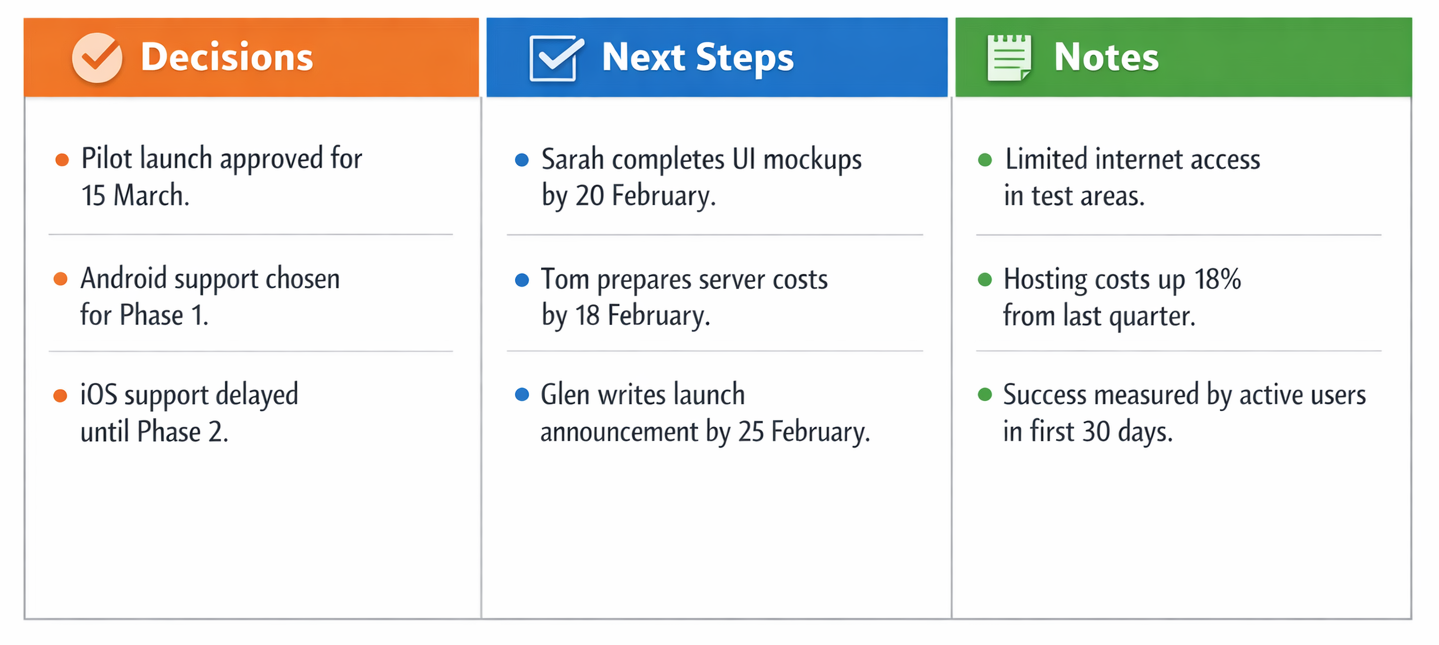
How to use these notes after the meeting
Share notes the same day. Use Decisions to confirm alignment. Use Next Steps to track progress. Use Notes to support future planning.

GlenH - Jan 3, 2026gghayoge at gmail.com